


What is the RAINE Group?
The RAINE Group is a think tank focused on advancing early childhood mental health consultation (ECMHC) through practice, policy, and research. The network was established in 2012 and is operated by Southwest Human Development, a leading nonprofit in Phoenix, Arizona, that specializes in early childhood development services.
Composed of nationally recognized experts in infant and early childhood mental health, the RAINE Group aims to contribute to the knowledge base of early childhood mental health consultation and share information about this specialized field.
Guided by the core principle of infant mental health—that relationships are what matter most—RAINE Group members have collaborated on a special issue of the Zero to Three journal on ECMHC, presented at the Zero to Three annual conference, participated in several World Association of Infant Mental Health (WAIMH) congresses, and helped create materials that explain and support ECMHC.
The RAINE Group was consulted by the Obama Administration’s My Brother’s Keeper initiative and played a key role in advocating for legislation to limit exclusionary discipline practices that disproportionately affect boys of color.
Members of the RAINE Group played a key role in securing federal support to establish the National Center of Excellence (CoE) for Infant and Early Childhood Mental Health Consultation. They have also served as trusted advisors to both iterations of the CoE. Individually, RAINE Group members consult with many states and communities, and recently the team completed a study highlighting important “lessons learned” about ECMHC during the early months of the Covid-19 pandemic.
Members of the RAINE Group

(Founder and Co-chair of RAINE) is a clinical psychologist and vice president of Mental Health Services at the early childhood nonprofit, Southwest Human Development, in Phoenix, Arizona. She is director of Southwest’s Harris Infant and Early Childhood Mental Health Training Institute, the statewide toll-free Birth to Five Helpline and its “Fussy Baby” home visiting service as well as Arizona’s system of early childhood mental health consultation, known as Smart Support. Her work currently focuses on early childhood mental health program development and professional development. She is the founder and co-chair of The RAINE Group, a think tank composed of national experts which works to advance practice, policy and research in the specialty of early childhood mental health consultation. She is one of the original authors of and workshop facilitators for the Diversity-Informed Tenets for Work with Infants, Children, and Families, and she is a national trainer for the FAN Approach to attuned communication. Dr. Steier is a frequent presenter on topics related to infant mental health, both nationally and internationally, and has published in the areas of early childhood mental health consultation, ethics in infant mental health, and young children’s attachments to special inanimate objects (“transitional objects”).

(Co-chair of RAINE) is the Director of Research and Evaluation and a professor at the Georgetown University Center for Child and Human Development. In this role, Dr. Perry provides leadership on a broad portfolio of applied research and rigorous program evaluations. Dr. Perry’s research focuses on approaches to designing and testing preventive interventions for low-income young children and their caregivers. An area of focus for her community-based research is the prevention of perinatal depression in high-risk women. Dr. Perry helped develop the evidence base for the effectiveness of early childhood mental health consultation, evaluating several statewide projects in the Washington DC region. She co-chairs the RAINE group and is faculty for the Center of Excellence for Infant and Early Childhood Mental Health Consultation. She also serves as the external evaluator for several federally funded grants including Washington DC’s Maternal Infant and Early Childhood Home Visiting program, and the SAMHSA-funded early childhood system of care grant in DC. Dr. Perry is the director of research for the Georgetown University Health Justice Alliance—a medical-legal partnership that seeks to reduce the effects of health-harming legal issues for vulnerable families in DC.

(Infant Mental Health Mentor) is a senior clinical instructor at the University of Colorado School of Medicine, Department of Psychiatry and codirector of Harris Community Fellow program in child development and infant mental health. She served as Colorado’s inaugural Director of Early Childhood Mental Health in the state Office of Early Childhood. That position represented public/private partnership and state level commitment to the role. In 2015, Ms. Ash developed the Colorado Early Childhood Mental Health Strategic Plan which continues to guide efforts and investments across the state. She previously held the position of senior program manager of Early Childhood Services at Mental Health Partners (MHP) in Boulder, Colorado. In that role, she created and implemented the award winning, nationally recognized Kid Connects model of early childhood mental health consultation and continues to oversee statewide and national adoption of the Kid Connects model elements. During her tenure at MHP, she developed a tool for reflective supervision which focuses on the experiences of the supervisee and is used across the country in clinical, academic and research efforts Ms. Ash is a founding member of the RAINE group, dedicated to the advancement of early childhood mental health consultation practice, policy, and research. Her recent publications can be found in the ZERO TO THREE journal and the December 2016 edition of Newborn & Nursing Review.

is a Licensed Clinical Social Worker and holds a Project Management for Development Professionals (PMD Pro) International certification. She was a 2013 Fellow of the National Zero to Three Leaders of the 21stCentury and is a national expert in early childhood systems integration, quality improvement and innovation, and Infant and Early Childhood Mental Health Consultation (IECMHC). Her work is grounded in implementation science. She has more than 20 years of experience in clinical behavioral health, management, and applications. She has led the development, implementation, and scaling of methods that improve outcomes for young children by improving the quality, coordination, and impact of early childhood services. She is an associate editor and sits on the editorial board of the international implementation science journal “Global Implementation Research and Applications.” Elizabeth is the owner of National Early Childhood Systems, LLC. where she provides supports to non-profit and tax-exempt organizations for cross system collaboration, service design, data system design, performance management and workforce development related to Infant and Early Childhood Mental Health Consultation and other early childhood systems. She has held the roles of Senior Director of Quality and Director of Improvement and Innovation at Healthy Steps National Office at ZERO TO THREE (ZTT). Prior to her work with ZTT, Elizabeth made significant contributions to the IECMHC evidence base, including cost efficiencies, data management systems, workforce development, and national competencies. In her previous role as Director of the National Center of Excellence for IECMHC Elizabeth built the capacity of states, tribes, and communities to use IECMHC to promote mental health and school readiness.

is the Assistant Director of Mental Health Services at Southwest Human Development in Phoenix, Arizona. In this role, she is a leader of the Smart Support program which is Arizona’s system of infant and early childhood mental health consultation known as “Smart Support.” Smart Support serves over 300 early care and education sites each year, serval home visiting teams as well as family, friend and neighbor programs. Leah also supports Expulsion Prevention initiatives at SWHD. Prior to Southwest Human Development, Leah’s work has included roles in early intervention, child care resource and referral and early care and child care systems. Leah holds a Master of Social Work from Arizona State University as well as the Infant/Toddler Mental Health Clinical Certificate from the Harris Institute at Southwest Human Development. She is a frequent presenter on topics related to infant and early childhood mental health and preschool expulsion prevention.

is a Professor in the University of Arkansas for Medical Sciences/ Department of Family and Preventive Medicine and Associate Director of the Research and Evaluation Division. She conducts research on factors that place children at risk for poor social and emotional outcomes, and designs, implements and evaluates interventions to support teachers, children and families. Her specific areas of research include children and families impacted by maternal substance use, depression and traumatic events such as abuse or neglect and she has published widely in these areas. She also focuses on interventions in early care and education settings designed to build social and emotional skills in young children. She directs Arkansas’ Early Childhood Mental Health Consultation program, called Project PLAY, which today primarily provides child-focused consultation services to support Arkansas’ expulsion prevention efforts. She is co-director of AR BEST (Arkansas Building Effective Services for Trauma) and helps lead efforts to implement trauma-informed care initiatives in preschool programs and social service agencies.

is an Associate Professor in the department of Psychiatry and Behavioral Medicine at Tulane University School of Medicine and a member of the Tulane Institute of Infant and Early Childhood Mental Health, is an international leader in reflective practice, mental health consultation and evaluation of mental health consultation programs. Dr. Heller directs the Tulane Early Childhood Relationships Support and Services (TBEARS), a home visiting program, affiliated with the Fussy Baby Network, which supports caregivers who are struggling with their infant or toddler. Dr. Heller also provides early childhood mental health consultation to childcare settings and conducts research and trainings in this area. She has been a senior supervisor on the LA statewide ECMHC program (TIKES) for over 10 years. Dr. Heller presents regionally and nationally on the DC:0-5 Diagnostic Classification of MH and Developmental Disorders in infant & early childhood, infant & early childhood mental health, mental health consultation and reflective practice.

is a clinical social worker who has been a practitioner in the field of infant and early childhood mental health (IECMH) since 1985. She is an independent consultant and Adjunct Professor at Georgetown University’s Center for Child and Human Development where she is contributing her expertise and experience in early childhood mental health consultation to two national TA centers. Ms. Johnston is the past Director of the Infant- Parent Program at the University of California, San Francisco where she pioneered an approach to IECMH Consultation that serves as a model for other organizations, locally, nationally, and internationally. In the final phase of her professional journey, Kadija is committed, and devoting energy to authentically instilling equity, diversity, and inclusion principles in all her endeavors. To this end, she is co-facilitating several communities of practice and providing webinars directed at the intersection of equity and IECMH Consultation practice. She is a national workshop facilitator on the Diversity-Informed Tenets for Work with Infants, Children, and Families.
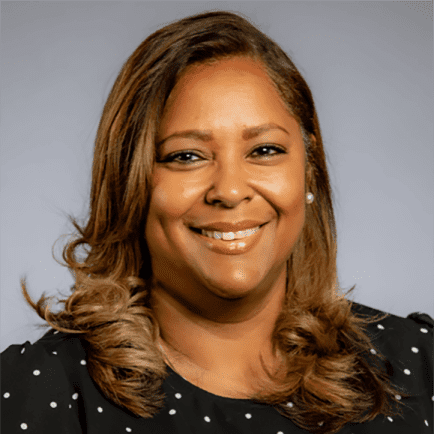
is an Associate Professor and licensed developmental psychologist at Tulane University. For the past 16 years, she has co-directed a statewide infant and early childhood mental health consultation program for early childhood education providers throughout the state. She is an Expert Faculty member with the Center for Excellence for Infant and Early Childhood Mental Health at Georgetown University and serves as EDI Officer for the Department of Psychiatry and Behavioral Sciences at Tulane. Dr. Keyes has a strong interest and background in equity, diversity and inclusion (EDI), particularly around supporting mental health professionals in recognizing how differences (e.g., race, culture, socioeconomic status, gender, spirituality) impact the therapeutic relationship, the importance of self-reflection to identify implicit biases, and the development of a culturally humble approach to working with individuals who have multiple intersecting identities.

provides training and technical assistance for the National Center on Health, Behavioral Health, and Safety at Georgetown’s Center for Child Health and Human Development. Her research, scholarship, and service focus on advancing minority mental health and equity, particularly among families that are pregnant and parenting young children. She has been involved with the Kansas Association of Infant Mental Health (KAIMH) for many years and served in several leadership roles, including at-large member, committee chair, vice president and president. She also started a standing committee on race and social justice within the KAIMH and continues to serve on that committee. Dr. Parker received the KAIMH Alice Eberhart Wright Visionary Award in 2020.

has provided clinical services, supervision, program development and management in the field of infant and early childhood mental health for over 20 years. She is currently the director of the early childhood mental health consultation (ECMHC) program at the University of California, San Francisco’s Infant-Parent Program which provides services to families and providers in family and early care and education sites, shelter programs, family resource centers and residential treatment programs throughout San Francisco. Previously, she cofounded and directed the ECMHC program at Jewish Family & Children’s Services of San Francisco, the Peninsula, Marin and Sonoma Counties serving the San Mateo and Santa Clara counties. She has extensive experience developing and implementing ECMHC programs, providing mental health consultation to shelter, residential and early childhood programs, and supporting the learning and professional development of early childhood mental health consultants and supervisors, providing training and reflective supervision within her program and to consultants in nearby states. She is endorsed as an Infant-Family and Early Childhood Mental Health Specialist and Reflective Practice Facilitator II by the California Center for Infant-Family and Early Childhood Mental Health.

is a clinical psychologist and associate professor at Tulane University School of Medicine where she co-developed the TIKES early childhood mental health consultation model (ECMHC), which focuses on supporting young children’s social-emotional development in early education settings. Dr. Trigg is the Executive Director of Tulane Mental Health Consultation Services, and she has directed the statewide TIKES ECMHC program for over thirteen years. Dr. Trigg has published peer-reviewed articles on ECMHC and has spoken to many national groups about the ECMHC including Zero to Three, the American Academy of Pediatrics, and the US Office of Family Assistance among others. She co-edited the book, Managing Behavioral Issues in Child Care and Schools: A Quick Reference Guide, which was recently published by The American Academy of Pediatrics. Prior to joining the faculty at Tulane, Dr. Trigg received a master’s degree in Marriage and Family Clinical Psychology from Pepperdine University and a master’s and doctoral degree in Clinical Child and Adolescent Psychology from The University of Alabama. She completed a post-doctoral fellowship in infant mental health at Tulane University, where she evaluated and treated children under five in foster care and their caregivers.
What are examples of RAINE Group activities?
The RAINE Group has published several articles on early childhood mental health consultation and is currently preparing two new articles for publication. RAINE members frequently present at national and international infant mental health conferences and serve in consultative or advisory capacities for many states and communities who are embarking on or refining their consultation programs.